
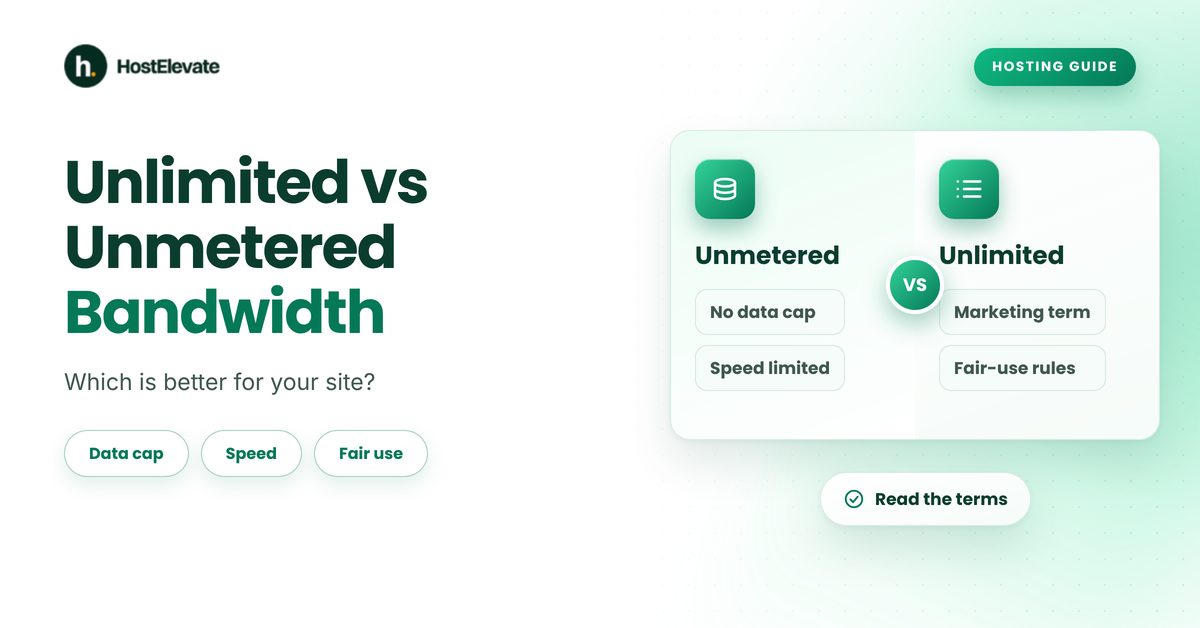
Unmetered bandwidth means your provider does not cap or count the data you transfer, but your connection speed is still limited. Unlimited bandwidth is a marketing label that sounds similar, yet it usually comes with fair-use rules. Unmetered is the clearer promise, but you should read the terms for both.
This guide is for website owners and buyers who see both words on hosting and VPS pages and want to know the difference. You will learn how unlimited vs unmetered bandwidth works, which limits still apply, how to estimate your own usage and which option fits your site, so you can choose with confidence before you buy.
key takeaways
- Unmetered bandwidth removes the monthly data cap, while your port speed still limits how fast data moves.
- Unlimited bandwidth is a marketing term, and fair-use rules and resource limits usually apply.
- In the unlimited vs unmetered bandwidth debate, neither one means unlimited server power.
- Most websites use far less bandwidth than they fear, so estimate your usage first.
- Read the terms of service, not just the plan label, before you buy.
What Is Unlimited vs Unmetered Bandwidth and Why Does It Matter?
Unlimited vs unmetered bandwidth is the difference between two ways a provider can describe your data transfer allowance. The wording matters because it decides what happens when your traffic grows, and because the terms behind each label are not always the same.
What Is Bandwidth in Web Hosting?

In web hosting, bandwidth usually means the amount of data your website sends to visitors over a period, often a month. Every page view, image, video and file download counts. The word can also describe the speed of a connection, so it helps to ask which meaning the provider uses.
What Does Unmetered Bandwidth Mean?
Unmetered bandwidth means the provider does not count your data transfer against a monthly cap. You are not billed or restricted by the number of gigabytes you move. The connection still has a fixed speed, for example the speed of the network port, so it limits how much data can flow at one time.
What Does Unlimited Bandwidth Mean?
Unlimited bandwidth is a marketing term that promises no fixed transfer cap. In practice, most providers add fair-use or acceptable-use terms, so heavy or unusual traffic can still be limited. The word “unlimited” describes the plan label, not the physical capacity of the server.
How Do Unlimited and Unmetered Bandwidth Compare?
In unlimited vs unmetered bandwidth, unmetered removes the data cap and fixes the speed, while unlimited removes the stated cap but depends on fair-use terms. Use this table for a quick comparison.
| Feature | Unmetered bandwidth | Unlimited bandwidth |
| Monthly data cap | None counted | None stated |
| What limits you | Connection speed | Fair-use terms and server resources |
| Typical wording | Clear technical term | Marketing term |
| Where you see it | Often VPS and dedicated servers | Often shared hosting plans |
| Risk of surprise limits | Lower, if the speed is stated | Higher, if the terms are vague |
| What to check | Port speed and acceptable use | Fair-use policy and resource limits |
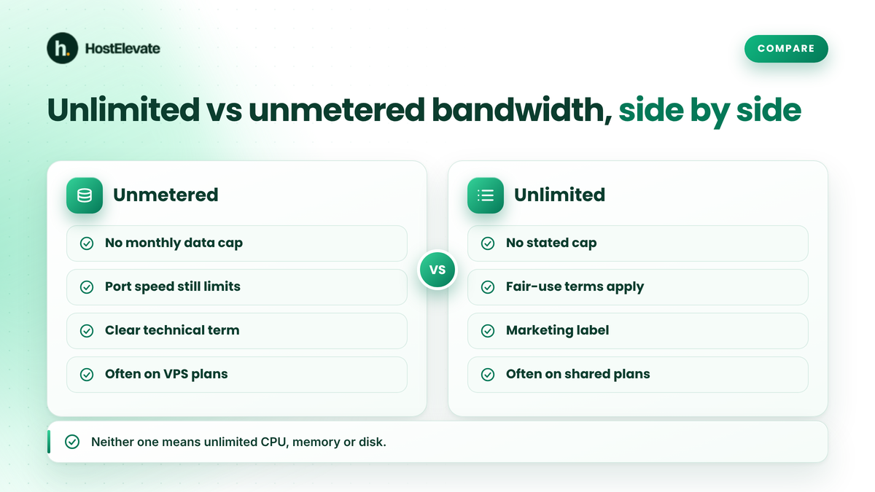
Unlimited vs unmetered bandwidth: a side-by-side comparison
What Are the Main Differences in Unlimited vs Unmetered Bandwidth?
There are five main differences in the unlimited vs unmetered bandwidth choice: the meaning of the term, what is actually limited, speed versus volume, fair-use rules and the best fit. Each one affects how your site behaves under traffic.
The Meaning of the Term
Unmetered is a technical description: traffic is not measured against a cap. Unlimited is a sales description: the plan advertises no cap. The difference is small in wording and large in what you can rely on.
What Is Actually Limited
With unmetered bandwidth, the limit is the speed of your connection. With unlimited bandwidth, the limit is whatever the terms and the server resources allow. In both cases, CPU, memory and disk activity still have limits.
Speed Versus Volume
Volume is how much data you transfer in total. Speed is how fast data can move at one moment. Unmetered plans remove the volume limit but keep a speed limit, so a busy site can still slow down when many visitors download large files at once.
Fair-Use Rules
Unlimited plans usually include a fair-use or acceptable-use policy. It may restrict heavy file sharing, large downloads or traffic that harms other customers. Unmetered plans can have acceptable-use rules too, so read them in both cases.
Best Fit

Unlimited labels suit light sites on shared hosting, where traffic is modest. Unmetered terms suit sites that need predictable, high transfer on a VPS or similar service. HostElevate VPS hosting includes full root access, a firewall and DDoS protection, which helps when you manage traffic yourself. Check each plan page for its bandwidth terms.
How Much Bandwidth Does Your Website Really Use?
Your website’s bandwidth use equals the average page size multiplied by the number of page views, plus any downloads. You can estimate it in a minute, and most sites use far less than they expect. Knowing your real usage makes the unlimited vs unmetered bandwidth decision much easier.
Use this formula:
Monthly bandwidth = average page size × monthly page views
For example, if a page averages 2 MB and your site gets 10,000 page views in a month, that is 20,000 MB, or about 20 GB. This is only an example, so use your own numbers. Your analytics and hosting dashboard show real page views and transfer.
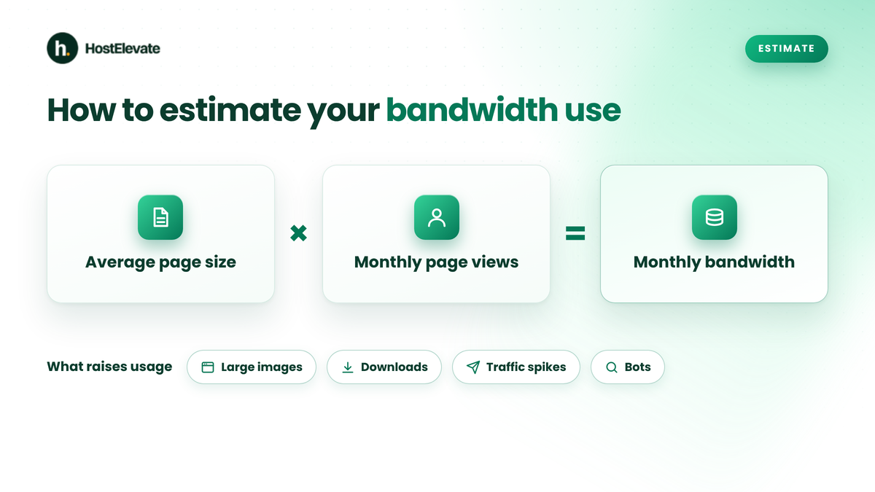
How to estimate your bandwidth use: page size times page views
What raises bandwidth use:
- Large images and uncompressed media.
- Video and audio files hosted on your own server.
- Large downloads, such as PDFs and software files.
- Traffic spikes from campaigns or social media.
- Bots and scrapers that request many pages.
What Limits Still Apply When Bandwidth Is Unlimited or Unmetered?
Even with unlimited vs unmetered bandwidth, other limits still decide how your site performs. The label covers data transfer, not the rest of the server. Use this table to see what to check.
| Limit | What it controls | Why it matters |
| Port or connection speed | How fast data can move at once | Large downloads can queue up |
| CPU and RAM | How many requests the server can process | Busy sites can slow down |
| Disk I/O | How fast files and databases are read | Heavy sites need fast storage |
| Inodes and storage | Number of files and total space | Large sites can hit file limits |
| Fair-use policy | What traffic is acceptable | Unusual traffic can be restricted |
| Process limits | Simultaneous scripts and connections | Spikes can cause errors |
HostElevate hosting plans use NVMe storage and LiteSpeed, which help with fast file delivery, but resource limits still apply, so check each plan page. For the cost factors behind plan limits, see our guide to web hosting cost.
Which Is Better for Your Site: Unlimited or Unmetered Bandwidth?
In unlimited vs unmetered bandwidth, unmetered is better when you need clear, predictable data transfer, while unlimited is fine for a light site that stays well inside fair use. The right choice depends on your traffic, your file sizes and how much control you want.
| Your site | Better fit | Why |
| Blog or portfolio with modest traffic | Unlimited on shared hosting | Usage stays far below fair-use limits |
| Company site with steady visitors | Either, after reading the terms | Check resource limits too |
| Online store with traffic spikes | Unmetered on a VPS | Clear transfer terms and more control |
| Site with large downloads or media | Unmetered on a VPS | Heavy transfer needs a stated speed |
| Several sites on one account | Check the terms first | Combined usage counts together |
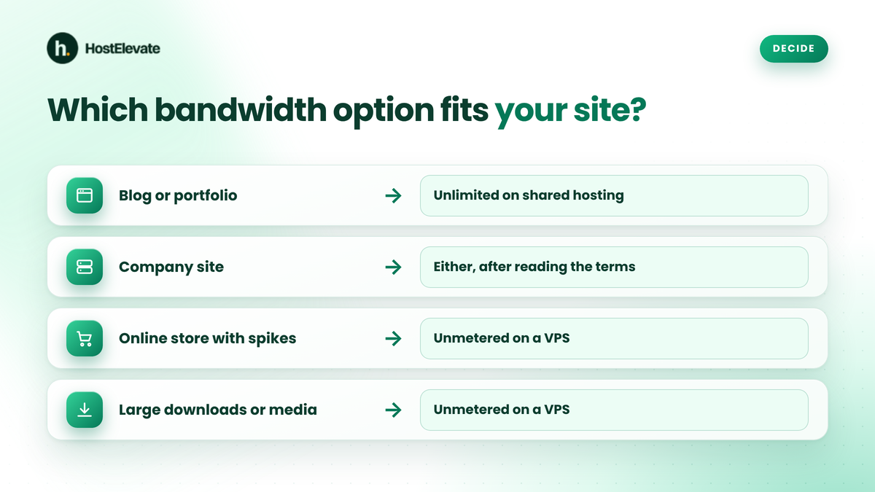
Which bandwidth option fits your site: unlimited or unmetered
If you are not sure, start with the lowest-risk option for your size and upgrade when your traffic data shows you need more. You can compare current options on the shared hosting page.

How Can You Reduce Your Bandwidth Use?
Whichever side of unlimited vs unmetered bandwidth you pick, you reduce bandwidth use by sending fewer and smaller files to each visitor. These steps help on any plan:
- Compress images. Resize them to the size you display and use modern formats.
- Use caching. A cache keeps copies of files, so your server sends them less often. Cloudflare’s cache documentation explains how caching lowers the work your origin server does.
- Use a CDN. A content delivery network serves static files from locations closer to visitors.
- Host large media elsewhere. Use a video platform for large videos instead of your own server.
- Block abusive bots. Review your logs for unusual traffic.
Smaller pages also load faster, which supports Google’s Core Web Vitals.
What Should You Check Before You Buy a Plan?
Before you choose between unlimited vs unmetered bandwidth, check what the plan page and the terms say about bandwidth, speed and limits. Do not rely on one word in the headline.
- Does the plan say unlimited, unmetered or a fixed allowance?
- What is the fair-use or acceptable-use policy?
- What is the connection or port speed, if it is stated?
- What are the CPU, RAM, process and inode limits?
- What happens if your traffic grows too far: a warning, a limit or an upgrade request?
- Does the plan have the backups, SSL and support you need? HostElevate hosting plans include free SSL and backups kept for 3 months on a separate server.
For the real renewal terms, read web hosting renewal prices too.
Frequently Asked Questions
Is unlimited vs unmetered bandwidth just a wording difference?
No. Unmetered means data transfer is not counted against a cap, while your connection speed is still limited. Unlimited is a marketing label that usually comes with fair-use rules.
Can unmetered bandwidth still be slow?
Yes. Unmetered plans remove the data cap, not the speed limit or the server’s CPU, memory and disk limits. A busy site can still slow down when many visitors load large files at once.
What happens if I use too much bandwidth on an unlimited plan?
It depends on the provider’s terms. You may get a warning, a request to upgrade or a limit on your account. Read the fair-use policy to see what applies before you rely on the plan.
How much bandwidth does a website need?
It depends on page size and traffic. Multiply your average page size by your monthly page views to estimate it. Most sites with modest traffic use far less than they expect.
Does bandwidth affect SEO?
Indirectly. Bandwidth itself is not a ranking factor, but slow delivery from limited speed or heavy pages can hurt page speed and user experience. Smaller pages and good caching help.
Summary
In the unlimited vs unmetered bandwidth choice, unmetered gives a clearer promise about data transfer, and unlimited is a marketing label that depends on fair-use terms. Neither one removes CPU, memory, disk or speed limits.
Estimate your real usage, read the terms and pick the option that fits your traffic. When you are ready to compare plans, see HostElevate web hosting plans.